Cairn: "Because it is there"
A reflection on the first indie title I played in 2026, and the importance of such games.
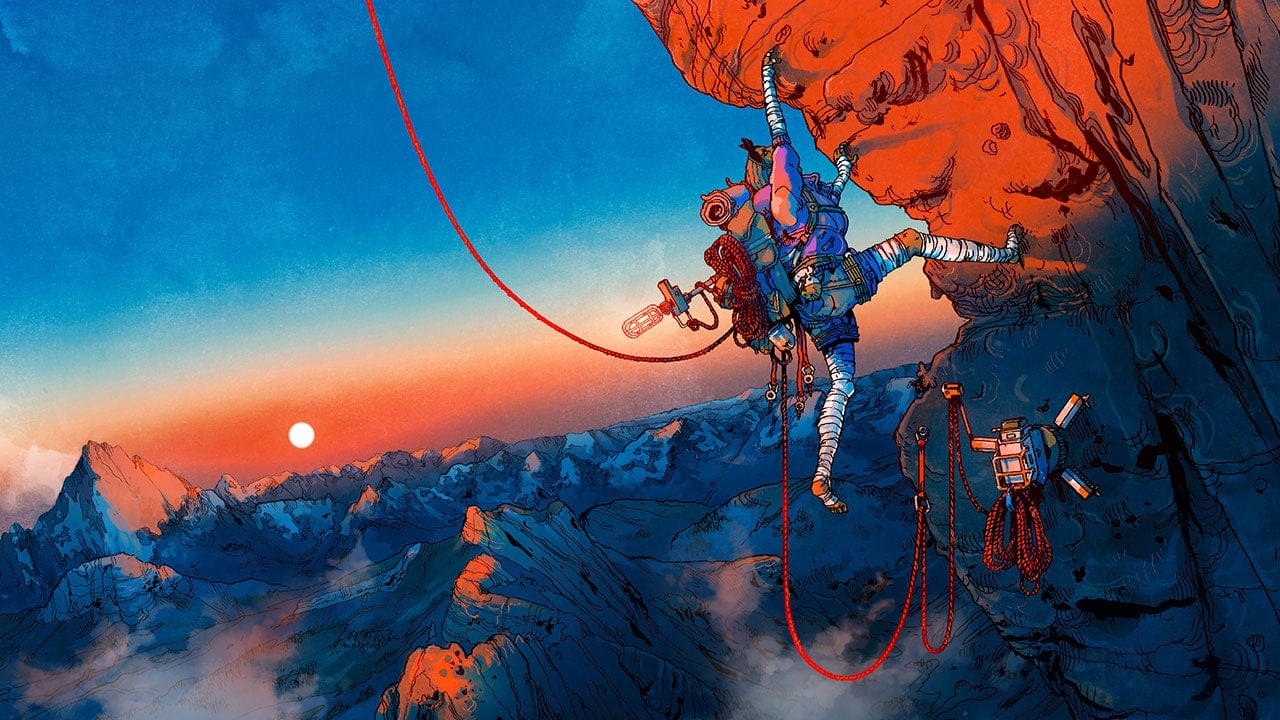
That refreshing feeling of playing an indie title after months of AAA titles is one that often surprises me. Cairn was a visceral reminder of how much depth of experience and impact lives amongst the wealth of games below the popular titles when you go digging.
The release for Cairn had been on my radar ever since a chance encounter with its announcement trailer in early 2025, as seeing anything from The Game Bakers instantly draws my attention. After the studio's first cult success, Furi in 2016, I knew I'd be gripped by anything else they might publish. Their housemark style of blending simple yet effective uses of gameplay and punchy audio design. But with this recent entry into the studio's growing catalogue, I wasn't certain what to expect.
An unfair comparison might be to draw parallels to an equally recent climbing-inspired game, Peak from publisher Aggro Crab. Another (less cult) success from mid-2025 that slotted neatly into the newly defined and popularly growing sub-genre of games - 'friend slop'. Like a lot of friendship groups, my own had been drawn in by the online hype which encircled this fun co-op experience in the weeks and months following its release. It was a fun distraction from your typically stressful multiplayer matches in our typically regular esports titles, but not one with much staying power (for us at least). As such, it gave me pause to consider whether another game like Cairn, so close in proximity to this experience, could take 'climbing' as a gameplay mechanic into a unique or engaging direction. Surely, I thought, grabbing and pulling is the only way to execute on this design with the imagination and tooling we have available to us?
Thankfully, I was terrifically wrong.
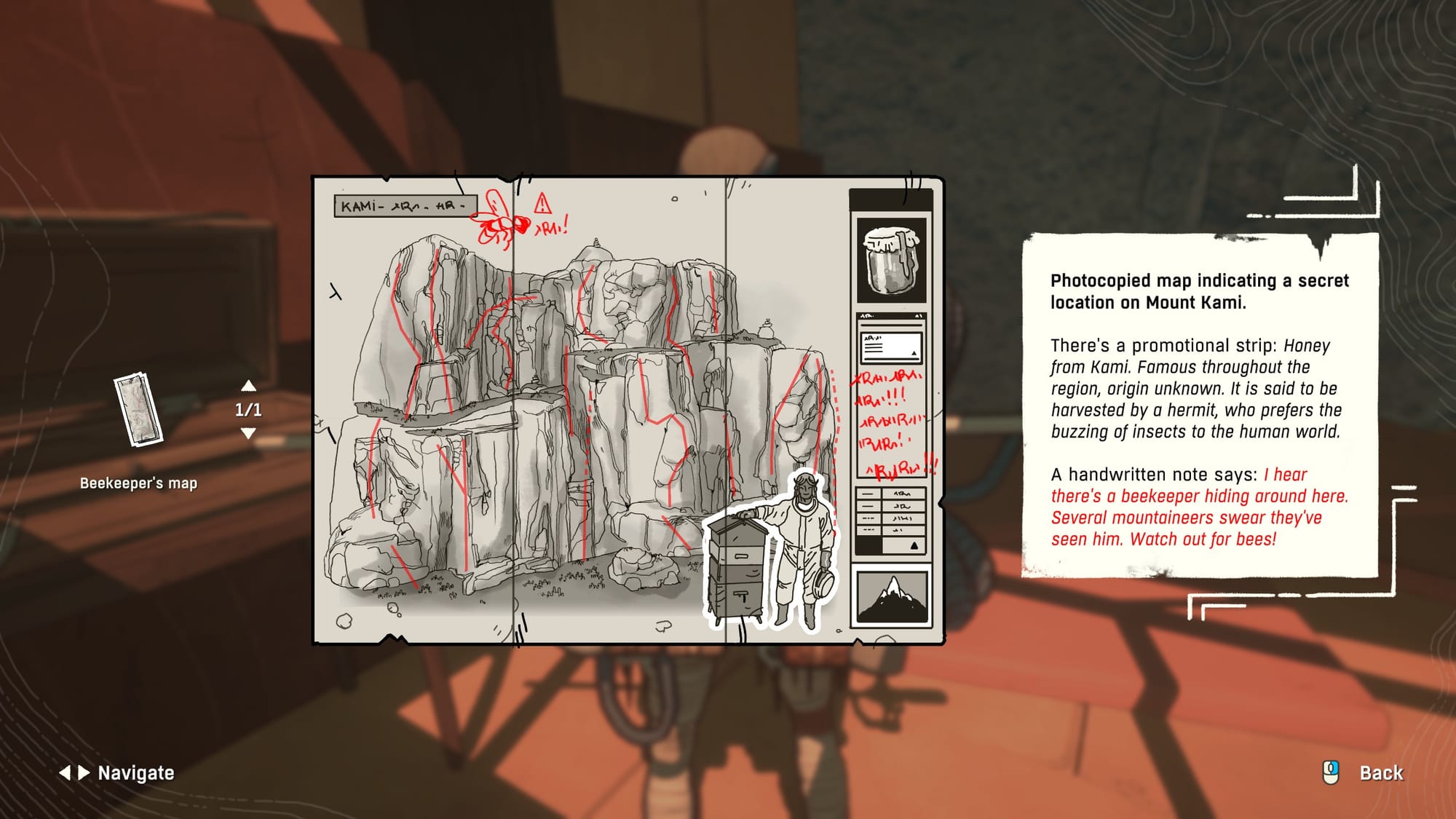
In Cairn, players control Aava, a professional mountaineer who seeks to summit the mysterious Mount Kami. It's a primarily solo adventure, with long stretches of isolated introspection and conscious climbing, occasionally punctuated by chance encounters with other climbers braving the idea of summitting Kami's snow-topped peak.
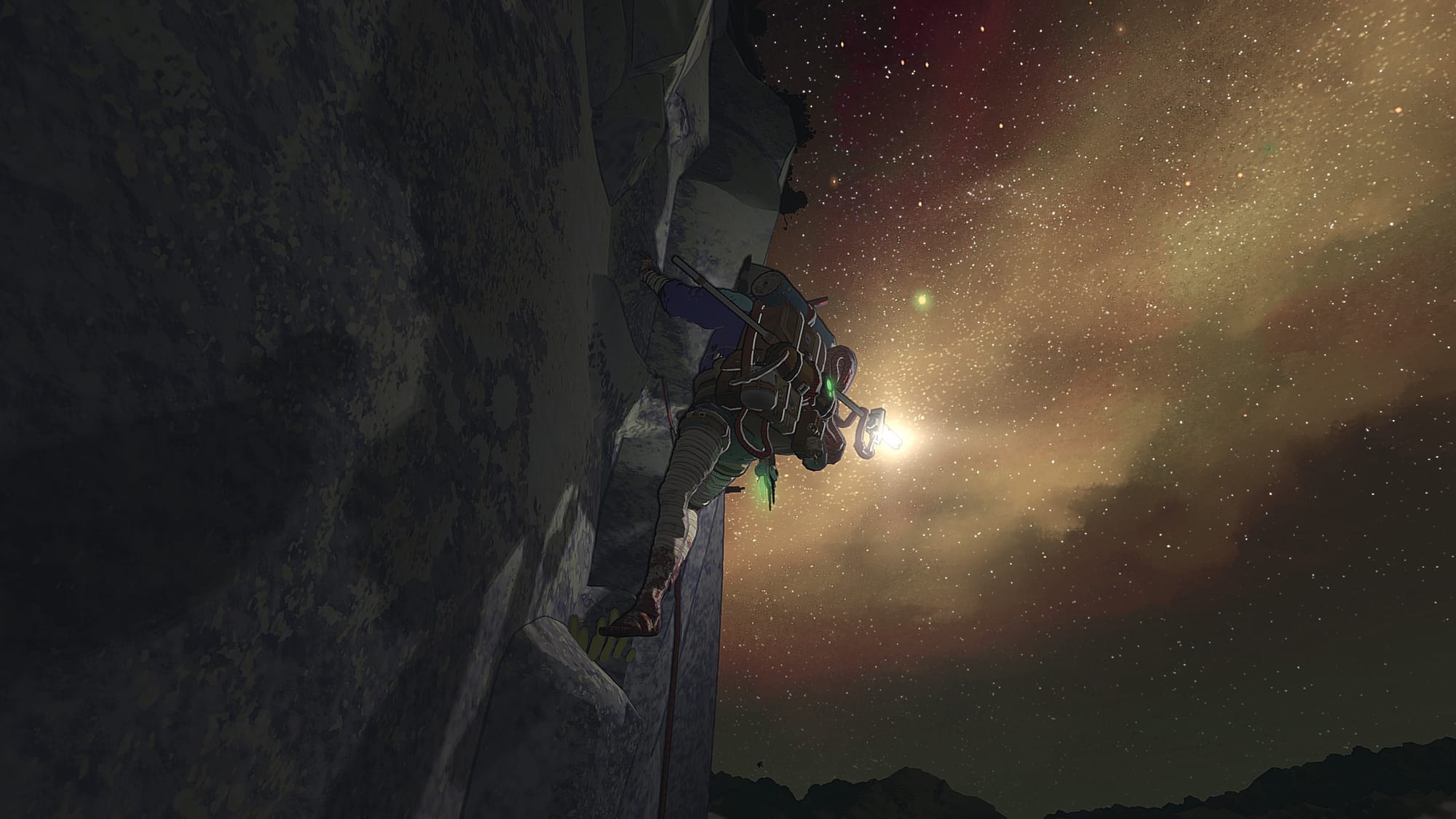
The story is one of decent impact, but for me, Cairns' main draw is how well it emulates the grit and often frantic resilience required to shift one's body up a vertical slice of rock - that beautiful sport we call climbing. In my own life, I've climbed intermittently for the past seven years, on various surfaces and heights, and over that time my appreciation has only grown for the fitness and endurance required for extended pitches. I get a kick out of the in-group joke of what it takes to progress in a climber's journey (small and large): "when you're feeling stuck, just go up". But in Cairn, just going up really is everything. For Aava and the player, come what may, she will doggedly pursue the summit of a mountain in both mind and body. This pursuit brings up many emotional and reflective beats for the story, but as before, it's the animation and sound design of Aava's climbing performance that really brings me into this experience.
I'm not certain how it would feel to empathise with these features as a non-gamer, but hearing Aava's raspy panting, her shaky speech and attempts of positive reinforcement; witnessing her arms and legs tremble when the next safe anchor sits mere feet away... well, my palms are just sweating now as I draw upon the memories.
Every climber knows this feeling. Each foothold brings you closer and closer to a summit, whilst simultaneously extending you further and further beyond your last piece of protection. It's a mental battle so profound that the challenge of the climb often lies deep in your amygdala, rather than having anything to do with your body's capacity to perform the moves. And every pitch, every crux, hand-crafted into the rockface of Mount Kami has been chiselled away to mirror this visceral experience. The Game Bakers cooked with this one.
Returning to my point at the start of this review, what Cairn helped me realise was how important a good first artistic experience can be when we step into a new year and a new mindset. Too often, I've rung in the year by a stale repetition of traditions yore, including the games I return to year after year. That's not to say that I don't get immense joy and fulfilment from the titles I repeatedly play with my friends (currently it's League of Legends and Overwatch), but I've learned something about myself. I need that kind of solo experience to reignite my passion and awe for the video game medium as an art form now and then.
To quickly touch back in the story... I wasn't so wedded to the ending. No spoilers, but it departs in quite a metaphorical way, whereas I would have been better moved by a more concrete or definitive conclusion. That being said, I can't fault the story beats that Cairn was able to muster in what is a fairly sparse game of dialogue and character-to-character interactions. But the beats of Aava's relentless search for fulfilment at Kami's summit always brought me back to a quote I first heard at a Public Service Broadcasting gig 13 years ago (listen below). PSB often insert snippets from archival audio and video recordings from TV and radio, and their song 'Everest' concludes with a very arresting quote from George Mallory, the mountaineer who died on his pursuit of summiting Mount Everest. When interviewed about why he wanted to pursue the summit of Everest, a peak which in his time had remained unsurmounted, Mallory stoically responded: 'Because it's there'.
Cairn could easily bear this answer as its own subtitle. Like Mallory, the mountain becomes an all-consuming endeavour for Aava. As the players, we urge her forward, one handhold and foot placement at a time. We feed her, rest her, and share with her perhaps her most contemplative and self-destructive moments. The designers empower us with a terrific and terrible agency and a haunting question to ask ourselves, much like the interviewers did with Mallory.
Why do we climb Mount Kami?
Public Service Broadcasting - I first saw them at Digital in Newcastle, 2013